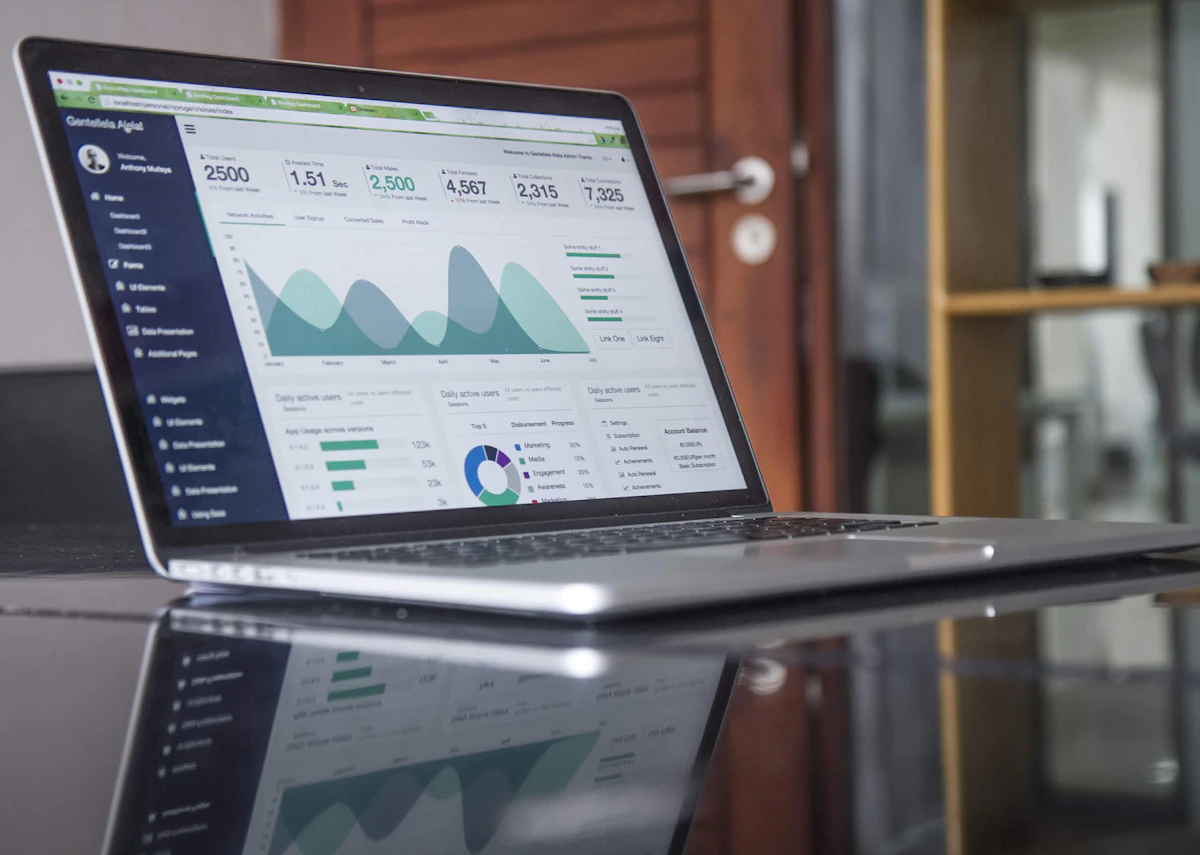
How I Use Data Analytics to Predict Marketing Trends and Customer Behavior
Using Google Analytics 4, Looker Studio, and predictive modeling to forecast trends, adjust campaigns, and improve ROI.

Turn SEO Audits into Professional Sales Decks Instantly
Built exclusively for agencies that sell SEO.
Most marketers drive looking in the rearview mirror. They report on what happened last month. I teach my clients to drive looking out the windshield. Here is how I use predictive analytics to forecast revenue, churn, and trends before they happen.
The "Descriptive" vs "Predictive" Gap
Descriptive Analytics: "We sold 500 units last week." (So what?)
Diagnostic Analytics: "We sold 500 units because we ran a sale." (Okay...)
Predictive Analytics: "We will sell 600 units next week if we increase ad spend by 10%." (Now we are talking).
You don't need a PhD in Data Science to do this. You just need historical data and simple regression models.
1. Predictive LTV (Lifetime Value)
Waiting 12 months to see if a customer is profitable is too slow. I want to know on Day 1.
I use "Signal-Based" prediction.
Analysis: I looked at 3 years of customer data for a SaaS client.
Finding: Customers who integrated Slack within 3 days of signing up had a 5x higher LTV than those who didn't.
Action: We stopped optimizing ads for "Signups". We optimized for "Slack Integrations".
Result: LTV increased by 40% in 6 months because we were acquiring better customers, not just more customers.
2. Churn Prediction (The "Flight Risk" Score)
Most companies try to save a customer after they cancel. That is like doing CPR on a skeleton.
I build a "Health Score" for every user based on weighted variables:
- Login Frequency: (30% weight). Decreasing trend = Risk.
- Support Tickets: (20% weight). > 3 tickets in a week = Risk (Frustration).
- Usage Depth: (50% weight). Are they using key features?
If the score drops below 40/100, an automated alert goes to the Customer Success Manager: "Call [Customer] today. They are about to leave."
3. Trend Forecasting with external Data
Your internal data is only half the story. The market is the other half.
I built a "Seasonality Predictor" for a retail client selling winter gear. We didn't just use "Month" as a variable. We used "Temperature".
The Model: Sales = (Ad Spend 1.5) + (Inverse Temperature 50) + Baseline
We connected a Weather API to our dashboard. When the forecast predicted a drop below 50°F in Chicago, our ads automatically scaled up budget in Chicago 48 hours before the cold snap.
We captured the demand while competitors were still reacting to last week's report.
4. Tools for the Non-Data Scientist
You can do this today without Python.
Google Analytics 4 (Native): GA4 has "Purchase Probability" and "Churn Probability" metrics built-in. Use them to build audiences.
Google Sheets (Forecast Function):
=FORECAST.LINEAR(target_date, historical_sales, historical_dates)
This simple formula is accurate enough for 80% of budget planning.
BigQuery ML: If you have data in BigQuery, you can run Logistic Regression models using standard SQL.
CREATE MODEL ... OPTIONS(model_type='logistic_reg') AS SELECT ...
5. The "Next Best Action" Engine
This is the holy grail. Instead of sending the same email to everyone, we predict what they need next.
Customer A: Bought Running Shoes.
Prediction: 60% probability of buying Running Socks within 2 weeks.
Action: Send "Socks Discount" email on Day 10.
Customer B: Bought Running Shoes.
Prediction: 80% probability of needing new shoes in 6 months (based on average mileage).
Action: Send "Time for an upgrade?" email on Day 180.
Conclusion
Predictive analytics is not about "Guessing". It is about confidence intervals.
If I can tell you with 80% confidence that a lead from Source X is worth double a lead from Source Y, you will budget differently. In a tight economy, the marketer with the best crystal ball wins.
Predict the Future of Your Marketing
Don't just look at past data. Use predictive analytics to forecast trends and allocate budget where it will have the highest impact.
Turn SEO Audits into Professional Sales Decks Instantly
Built exclusively for agencies that sell SEO.